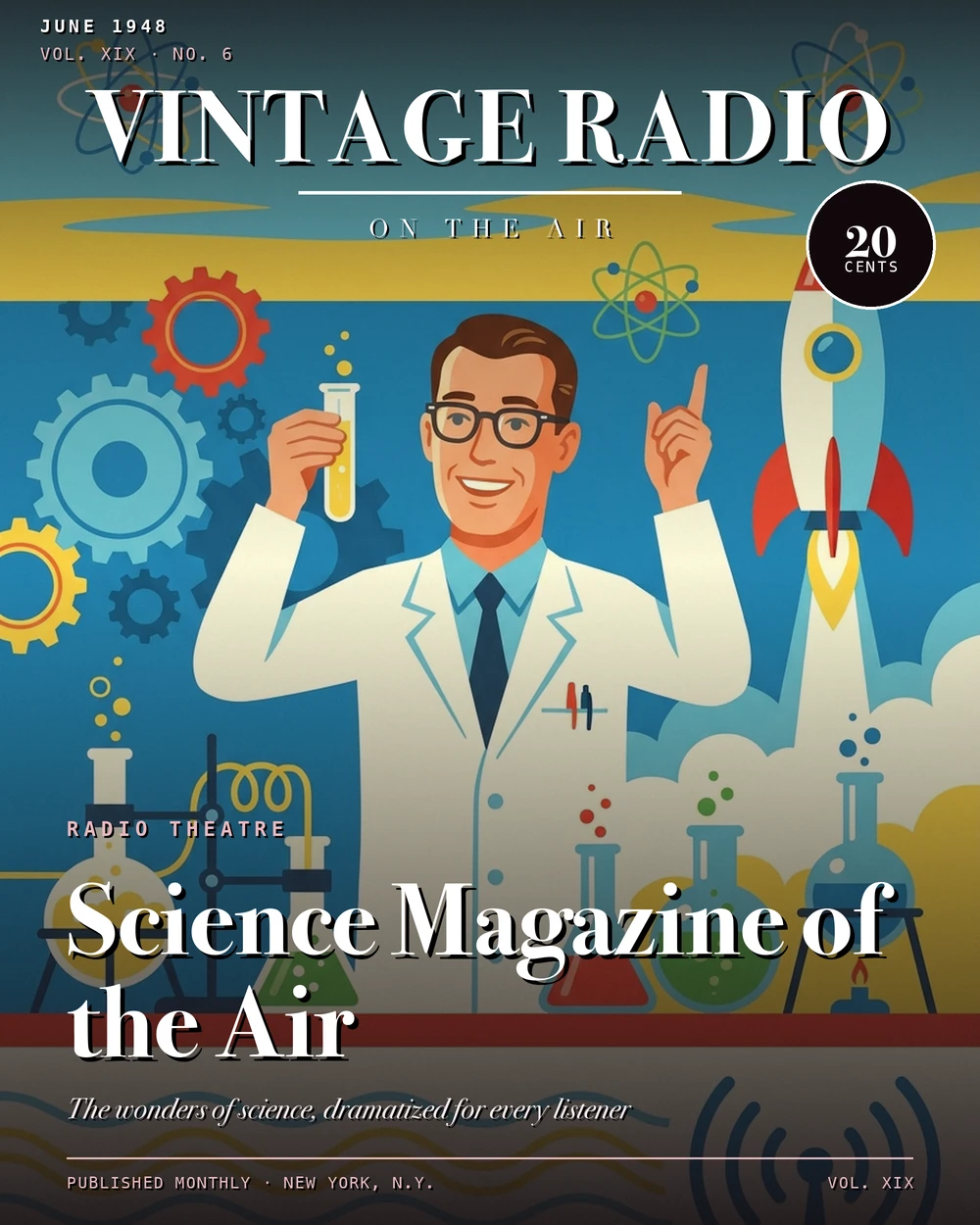
Science Magazine of the Air
What the Show Actually Was
Science Magazine of the Air is one of those old-time radio programs where the date in the catalog record tells you less than you'd hope. The 1967 figure attached to it almost certainly reflects when recordings were catalogued or circulated rather than when the show originally aired. Both major OTR catalogs describe the series as "most likely from the 1940s," aimed at servicemen during wartime — which squares far better with the tone of the material and the subjects it covered than any space-age framing would.
Think of it less as a news magazine about science and more as a dramatic anthology built around science and discovery. OTR sources describe the show as featuring dramatic stories of science and industry, along with profiles of historical figures — not panel discussions or talk-radio roundtables, but narrative radio in the tradition of programs that brought real events and real people to life through performance and storytelling. That wartime context matters: the show was built for an audience that needed both practical information and stories about what human ingenuity could accomplish.
The range of subjects confirms this character. Across its episodes, the series moved freely between contemporary science and historical scientific biography, from atomic energy and crime detection to steam engines and Leonardo da Vinci. That breadth reflected a deliberate effort to show science as a continuous human story rather than a collection of technical facts.
What It Covered
The 22-episode catalog gives a reasonable picture of just how wide Science Magazine of the Air cast its net. Titles like "Rockets Away" and "Flying Laboratory" point toward aviation and emerging technology. "Lights On" and "Inside the Camera" suggest episodes built around specific inventions or industrial processes. "Builders of the Bridge" sounds like the kind of engineering-history piece that dramatized the human effort behind large-scale construction. "Listening In" may well have covered radio itself — a fitting subject for a program broadcast over the airwaves.
Then there are episodes that lean toward biography and history. At least one episode explored the potential for human life on other planets, and the documented subject matter spans atomic energy, steam engines, and figures like Leonardo da Vinci — suggesting the show was comfortable ranging from the ancient world to the cutting edge of mid-century science. Titles like "Doctor and the President," "Secret War on Wolfram," and "The Bells Toll" hint at episodes that found drama in the intersections of science, medicine, and wartime necessity.
The magazine-style structure — multiple segments per episode, moving from topic to topic — gave producers flexibility to pair a profile of a historical scientist with a piece on a current industrial development, or to anchor a technological subject with a human story. That format, common in radio programming of the period, helped keep varied material coherent from one week to the next.
How It Fits Into Old-Time Radio History
One catalog groups Science Magazine of the Air alongside programs like Cavalcade of America, You Are There, and Roles of Science in War on one side, and science-themed shows like Excursions in Science and Encore Theater on the other. That dual placement is revealing. The show shared DNA with the historical drama programs that used narrative and performance to make history feel immediate — but it also belonged to a smaller category of programs specifically dedicated to science as a subject.
Cavalcade of America and You Are There were well-resourced productions with major sponsorship and network reach. Science Magazine of the Air operated in a more modest register, aimed at servicemen rather than a mass civilian audience, but the intent was similar: make the past and present of human achievement feel worth caring about. Profiles of "great men of science and their world changing discoveries," as one catalog describes the show's content, were a staple of wartime broadcasting, which consistently leaned on stories of individual ingenuity and collective progress.
The show's wartime audience also explains some of the subject matter. "Secret War on Wolfram" — wolfram being another name for tungsten, a metal critical to weapons manufacturing — points directly at the kind of science story that would have carried real urgency for listeners following the war. Crime detection, atomic energy, and aviation were similarly freighted subjects in the 1940s, carrying both practical weight and a sense that science was reshaping the world in real time.
What Survives
Twenty-two episodes are held in the catalog, with one catalog listing 25 recordings totaling just over eleven and a half hours — a slight discrepancy that likely reflects duplicates or alternate versions circulating in different collections. For a show of this era and scale, that's a reasonably solid survival rate. Many wartime radio programs disappeared entirely; the fact that more than two dozen recordings of Science Magazine of the Air made it through to collectors and archives suggests the material was valued enough to be preserved and passed along.
The episode titles that survive give a decent cross-section of what the show was doing. Aviation ("Flyers," "Flying Laboratory," "Rockets Away"), technology ("Inside the Camera," "Lights On"), engineering history ("Builders of the Bridge"), wartime science ("Secret War on Wolfram"), and broader historical biography all appear in the record. "She Devil" and "The Bells Toll" are harder to categorize from the title alone — a reminder that the full picture of what Science Magazine of the Air covered is still something the surviving recordings themselves have to fill in.
For anyone interested in how radio handled science and discovery during the 1940s, or how wartime broadcasting tried to connect servicemen to the larger story of human ingenuity, this series offers a direct and relatively unmediated look at that project. It wasn't a prestige production, but it was doing something real: taking the work of scientists and engineers seriously, framing it dramatically, and trusting its audience to find those stories worth their time.